February Drop in Session

Need advice about an issue with your boss or landlord? Want support organising in your workplace or community? Want to talk about anarchism or syndicalism? Want to meet members of the group and find out how SolFed works? Just want to say hi? Then come see us at one of these drop in sessions.

The next session will be on Thursday, February 19th, 19:00 – 20:00, at the London Action Resource Centre (LARC), 62 Fieldgate Street, E1 1ES. We will be in the upstairs rooms. If you can, please bring a donation for the space.

New Flyer – Building Beyond Elections

We have another new flyer ready to share with the world! Building Beyond Elections lays out an anarchist critique of electoral politics, how our “democracy” does not offer us the power it claims, and a syndicalist alternative. It is designed to be easy to print on a work or home printer, being a single sheet of folded A4, so feel free to print your own. It is available along with all our flyers in more formats, like block black and white and booklet, in our Materials and Flyers page. Full plain text available below the pdf on this post.

DEMOCRACY

The core assumption of our political system is that the government represents the will of the people and that this will is expressed through elections. Because of this, political parties are the most important organisations in mainstream politics and many people do not get involved in politics beyond voting. Most people do not even know what politics looks like outside of trying to win elections and those wanting progressive social change rely on parties like Labour, the Greens, or the Liberal Democrats.

This pamphlet will argue that this approach to politics is not enough to achieve lasting progressive change, that our political system does not work the way it is described, and that our votes are worth far less than we are led to believe. Instead, we need to build stronger organisations in our workplaces and communities, and with these organisations we can change society regardless of who is in government and no matter how hard they try to resist change.

MAJORITIES

The first problem with our democracy is that even a perfect democracy can only represent the interests of the majority of the population. This is a problem in a world where one of the main social problems we face is the oppression of minorities. There is no reason to expect that a majority will not be racist, sexist, homophobic, unreasonable, or simply mistaken in its understanding of the general interest. If a majority supports the oppression or exploitation of a particular minority, as has often happened, then a democratic vote does not protect that minority, instead it empowers the majority to impose its will.

However, even majority rule would be an improvement over the current system. In Britain the average percentage of votes needed to win an election since World War Two has been only 43%. If the entire population is taken into account, not just those who both could and did vote, the average percentage needed to win an election since World War Two is only 23%, with the lowest being 16% in 2005. Political parties do not even have to represent a majority in order to gain power. This means a political party representing only a minority of the population can take power and run society in the interests of that minority at the expense of everyone else.

Worse still, within our current economic system not all political support is equal, because material wealth is unequal. The support of a homeless person or a poor gig worker is not the same as the support of a rich factory owner or a media baron. The poor can cast their vote, but the rich can give a political party large sums of money, spread their message, and have far more impact in an election. The rich can also afford to be better informed than the poor, employing their own experts and setting up their own think tanks, while the poor often have to rely on the mainstream media to understand politics. This media is owned by the rich and represents their interests. As long the rich exist, they will always have far more influence on politics than just the vote they cast at the ballot box.

POLITICIANS

Many people have an intuitive grasp that our current political system is not as democratic as it claims to be, and that democracy does not necessarily guarantee that a political party will govern in the interests of everyone. However, people often hope that if we elect the right politician, they will work in the general interest despite the fact that they only need the support of a minority to gain power.

However, politicians do not get to do whatever they feel is best for everyone. They are in competition with each other for power and they must be efficient in how they build support and reward their supporters, or they will lose elections. If a politician only needs the support of a minority to win an election, it makes the most sense to dedicate as many resources as possible into pleasing that minority. Those resources have to come from the parts of society outside of the politician’s support base. Often the ideal of governing in the interests of everyone conflicts with reality that a successful politician needs to screw over most people in order buy the support of powerful factions like the rich.

This is made even worse by the fact that, most of the time, politicians are not democratically accountable even to their supporters. They have to gain that support once every few years in order to hold a particular office, but once they have that power they can act how they please. If an elected official does something that voters disagree with, voters have no immediate power to stop them and they must wait until the next election. An elected official can break all of their promises, start a pointless war, tax us into poverty, and set the police on us if we complain, and unless it is an election year we have no way to hold them to account. Our “democracy” is a system in which we get to change dictator every few years.

BUREAUCRATS AND BUSINESS

The modern centralised “democratic” state suffers from another problem; it is too large and too complex to ever be truly democratic. The central state handles so many decisions that we would not have enough time in the day to vote on everything, let alone educate ourselves on the issues behind each vote and discuss them across the country. Under the current political system only certain important decisions can come to a vote, and the rest have to be handled by specialists who we hope will act in the general interest.

This means that most of the actual governing of the country is not done by elected officials, but by a vast and unelected bureaucracy of administrators, technical specialists, and hired goons. Even the limited democratic oversight we have is often lost in the scale and complexity of this bureaucracy; whatever an elected official may want to do, it must be interpreted and implemented through many layers of bureaucratic hierarchy.

Not only does the state bureaucracy have far more day-to-day influence on the government we live under than who we vote for, but so do businesses and their rich owners. While a politician may have to worry about getting at coalition of common voters on side once every few years, they have to cooperate constantly with the capitalists who ultimately own and run most of the economy.

These capitalists not only provide support for individual politicians through direct donations, but also through promising to expand their operations in a politician’s constituency, providing jobs and injecting money into the local economy. They can also offer to part finance or help run government projects. They can even offer politicians cushy jobs that will make them rich when they leave politics.

More broadly, the capitalists run much of the economy as a class. Without the cooperation of the rich, the government loses a vital lever it needs to control and exploit the economy. This means that government policy is forever worried about making the country a “safe place for business” and not scaring away rich investors, while the rest of us are expected to put up with low wages and crumbling services.

THE GENERAL INTEREST

Up until now I have repeatedly used the term “general interest” because it is a concept that underpins democracy. Democracy assumes that there is a general interest within any given state, and so there a common frame of reference that voters and the government can use to make decisions that serve everyone. However, this assumption is false.

The interests of capitalists are often in conflict with the interests of everyone else. The capitalist class can gain more wealth and better protect that wealth if they pay workers as little as they can, gives us the fewest benefits possible, and pays as little tax as possible. Meanwhile the rest of us would like to be well paid and well treated for our work, and would like key services to be well funded from the collective wealth of society.

The interests of the state and its bureaucracy also clash with those of everyone else. Elected officials need to get resources form somewhere in order to please their supporters, and the bureaucracy itself needs both information on, and the obedience of, the population in order to function. The state always has an incentive to extract as much wealth as it can from its subjects, to become more and more invasive, and to build more and more effective methods of control over us. Our own interests are often the opposite; we would rather live as free as possible and not be used as a piggy bank to keep a politician’s cronies rich and happy.

There can only be such a thing as the “general interest” when the power of some is not built on the obedience of others, and the wealth of some is not built on the work of others. Given the structure of our society, the interests of the rich and powerful are inherently in conflict with the interests of everyone else. When someone uses the term “general interest” they have either not thought about the above, or are deliberately trying to hide this conflict.

I will no longer use the term “general interest”, because it often does not exist. Instead I will speak of the interests of the great class of people who have to either work in order to build the power of the state and the wealth of capital, or are left dependent on the benevolence of the wealthy and powerful to survive; the working class. This is the class of people that produce the real wealth of society, and which the current ruling class exploits in order to maintain their own power. The current system is designed to keep the working class powerless so that exploitation can continue. This is the class that I, and likely you, are part of.

ALTERNATIVES

The “democratic” state is not really that democratic, democracy itself does not protect minorities, and the very concept of a general interest we can discover by majority vote is a myth in a society in which a class of rich and powerful people exist at the expense of the working class. Putting all our hopes in such a “democratic” state is dangerous and historically has resulted only in disappointment. We need a better way of asserting our interests outside of elections and party politics.

One way to achieve this is by organising in our workplaces, where we have the power to bring the economy to a halt in order to get what we want. The rich use their control over the economy to influence the state, but they only wield that power because workers are not organised enough to take it from them. Every workplace relies on the obedience of its workers to their employer in order to function, and will grind to a halt in the face of strikes and slow downs. This is a power that we can use to get ourselves higher wages, lower hours, and better conditions regardless of who won the last election.

Another way to build the society we want is by organising in our community to directly serve our interests when they are ignored by those in power. This includes tactics like rent strikes and non-payment campaigns that prevent the rich and powerful from exploiting us, along with building institutions of mutual aid and self help to solve our own problems. Such institutions can rebuild the social fabric of working class areas that have had the bonds of community destroyed by the demands of capitalism and the government.

Such organisations must start local and small, dealing with problems like an abusive boss at an individual workplace or providing aid to a specific community. However, as more such organisations are set up, they can cooperate to achieve greater change; organising strikes not just to raise pay in one workplace, but across an entire industry, or even striking across the entire economy in order to fight unjust laws, or organising across multiple communities to pool resources to build the infrastructure we need as the government increasingly ignores us.

ANARCHO-SYNDICALISM

In building such organisations we need to avoid creating a structure in which one person or group of people, even if they are elected, sits at the top the organisation and dictates to everyone else what to do. We need to build these organisations on mutual agreement and consensus so that no one is ignored. We also need to build them from the bottom up, with each local organisation running its own affairs, based on the knowledge and understanding of those who actually live and work within that local area, so that we can avoid creating a new unaccountable bureaucracy. Both the mainstream trade union movement and many mainstream charities have failed to do this, and have instead created new bosses and new bureaucracies which exploit the working class instead of fighting for our interests.

But we must also build networks of communication and cooperation between local organisations so that they can act jointly and achieve wider changes. This is how we can build a movement that can fight for working class interests regardless of who is in government and regardless of what is profitable for capitalists. We do not have to wait five years to show our dissatisfaction by voting, instead we can put pressure on capitalists and governments whenever they harm us and build our own solutions to our problems. If we build, from the bottom up, a web of workplace and community organisation across the entire country, then we will no longer need the government or capitalists to run our lives for us; we could simply take over workplaces and infrastructure for ourselves in a revolution that genuinely put society and its collective wealth under the control of the workers who create and maintain it.

This approach to politics has a name. Because it is critical of all forms of rulership and seeks to organise without resorting to that rulership, it is anarchist, which literally means without (an) rulers (archy). Because it seeks to build working class power though organisations in the workplace and the community, it is syndicalist, which comes from the French word for a workers’ union. Together, these two ideas form Anarcho-Syndicalism.

Transphobic Networks in The Workplace

In mid 2025 it came to the attention of Solidarity Federation (SolFed) in London that transphobes were organising in the workplace under the banner of the Sex, Equality, and Equity Network (SEEN). A brief look at SEEN made it clear that this network was “gender critical”, or transphobic, but attempting to hide it behind a mask of fake feminism and liberal civility. London SolFed did some additional research into SEEN and produced a report for the wider federation in November 2025. This is a lightly edited version of that report for wider consumption.

We had initially intended to do a far more detailed report than this one, but it quickly became clear that this topic was beyond our capacity to cover in depth. We found 21 different transphobic professional associations operating in various industries, all networked together and into the wider transphobic milieu but without any formal central organisation. This represents a serious attempt to spread and defend transphobia in the workplace on a scale which we can not do a detailed analysis of in timely manner. Instead, we hope this broad overview still proves useful and that other can use this as a basis for their own work.

This report is based off of what can be found out about these associations from browsing their websites and social media accounts. This puts serious limits on what we can say about the on-the-ground composition and activity of each of these networks. Are these astroturfed organisations with no real presence in any workplace? Do they represent a membership scattered across each industry? Do they represent a membership concentrated in specific workplaces within each industry? These are important questions that can not be answered without a more specific, in-depth, and hands-on investigation into each of the individual networks.

Likewise, we can not make a firm judgement to the degree to which these associations meaningfully cooperate. While they lack a formal overarching organisation, the extent to which they are tightly organised along informal lines is something that is hard to say from the kind of broad but shallow investigation we have presented here, beyond the limited information that can be gained by looking at who is sharing who on social media, and announcements of open joint events.

A Brief History of SEEN

Most of these associations uses a similar SEEN branding, however there are a few associations that pre-date SEEN. The first of these professional associations, at least the first we could find that is still active, was the Evidence-Based Social Work Alliance (EBSWA) which now also goes by SEEN in Social Work, set up in 2020.

The next wave of associations came out of the healthcare sector. Thoughtful Therapists was founded in early 2021 and in 2024 launched a spin-off project, Just Therapy, which is a network of therapists which believe “much of the world of psychotherapy and counselling has been taken over by activists and ideologies”. With Woman, an association of maternity and women’s healthcare workers, was also founded in early 2021. The Clinical Advisory Network on Sex and Gender (CAN-SG), a doctors’ association, seems to have been founded in early 2022 and Transgender Map has done their own research into them, describing them as “an anti-transgender front group” who are “heavily involved in trying to stop NHS from conducting clinical trials on puberty blockers.”

These pre-SEEN associations have remained fairly active in terms of their online presence with well maintained websites, active social media accounts, and offer an unfortunate wealth of propaganda and other resources. From what can be seen on their social media accounts they are also networked with each other, the later SEEN associations, and the general transphobic milieu, with at least members of With Woman attending a 2024 meeting of transphobic professional associations.

In late 2022 the original SEEN network was founded as a professional association for civil servants. This seems to be an important moment in the birth of this broader network as all of the associations following this one share a general SEEN branding. Early 2023 then saw the launch of SEEN in the city, a network for people working in finance. After a gap of a year there was then an explosion in organising under the SEEN banner. In the first half of 2024 networks were launched for police, HR, parliamentary workers, science and technology, journalism, sport, schools, health, local authority workers, publishing, trade unions, and the Church of England. Third Sector SEEN then launched in late 2024 and SEEN on Campus launched in mid 2025.

All of these SEEN networks maintain a similar style and look and many of them have links on their sites to other SEEN networks. While there is no obvious coordinating organisation between these networks, the common branding and the fact that their seemed to be a concerted campaign to launch these networks in 2024 implies a significant level of informal coordination. From looking at the social media of these networks, they share content from the usual transphobic personalities and organisations and seem to be well embedded in that wider network. Of special note in this broader network is the charity Sex Matters which regularly puts up information about how to push transphobia in the workplace, hosted the previously mentioned meeting of transphobic professional associations, and also maintains a list of these associations that cover not just the SEEN networks but also the earlier associations that were launched before the SEEN branding became the dominant style among them.

Activity

Not all of these associations have been equally successful. Some already seem to be inactive with seven showing low levels of activity online, including the original civil service SEEN. Five more are moderately active online but do not seem to have developed much reach. The journalists network seems to be the most successful single network, with a publishing network also active that likely has some overlap. The healthcare sector is also a place of strength for these networks with not only an active SEEN network but also three active pre-SEEN associations. Combined, these associations probably rival the journalism network, although they have also had far longer to build up. The next most active seem to be the police, social work, and sport. Based on where it is most active, the SEEN network probably draws its support from the class of technocratic professionals with little clear reach into the rank and file working class.

In terms of the style of propaganda put out by these networks, they take great pains to avoid being open transphobes, emphasise that their views are legally protected, and attempt to pass themselves off as just concerned about “sex based rights”. This kind of tone likely sounds quite reasonable to people who do not know what they are looking at. The below quote from the original civil service SEEN’s about page represents this general tone well:

The focus of our network is on challenging sex discrimination and upholding rights and protections that relate to sex (including the protections provided to those with the protected characteristics of sex, pregnancy and maternity and sexual orientation, as set out in the Equality Act 2010). We recognise that to achieve this and ensure sex equality and equity sometimes requires treating women and men differently, according to our different rights and needs.”

In terms of activities, these associations seem to mainly devote themselves to various forms of lobbying, professional networking, propaganda, and developing resources such as form letters and legal advice. Campaigning over controlling access to toilets seems to be a common activity among many of these associations, along with defending people who have come under pressure for transphobic attitudes and actions.

Causes for Concern

Even the most successful of these transphobic professional associations are probably still quite small but we think they pose a real threat in a variety of ways. Firstly, they are trying to build networks in sectors in which professionals have a lot of day to day power over trans people: healthcare, policing, social work, education, and government. In these sectors individual professionals or managers often have the capacity to ruin the lives of trans people just by the nature of their position, and a network of transphobic professionals has the capacity to help empower and defend its members even if they lack any kind of mass movement in the general workforce.

Secondly, transphobic opinions are already massively over-represented in the media compared to the size of the transphobic milieu and SEEN networks have a well developed shared propaganda approach that makes them look as reasonable as they can given the implications of their actual ideas. I can see this approach leading to quit a few people who are not tuned in to what exactly they are looking at treating these SEEN networks as genuinely concerned with feminism and any attacks on them as attacks on feminism. The strength of SEEN in Journalism gives the network further propaganda advantages over any union or political group that may end up confronting them. Any counter-propaganda will have to be very careful and take pains to point out the actual implications behind all their polite wording and the links that they have to other transphobic organisations that are not as consistently slick in their messaging.

Lastly, given that transphobia is rapidly becoming a point of shared agreement among the ruling class of this country, with both Labour and the Conservatives being various forms of terrible on the issue and Reform being on the rise, it is possible that these networks will be able to punch well above their weight in terms of influence. While they may not represent a mass movement of workers, if they represent views that high level managers, capitalists, and politicians already agree with then they will be able to call on the power of state and capital without the need to develop a true broad based mass movement.

Given that much of the SEEN network was only set up in 2024, possibly by a coordinated campaign, it is also worth considering that we have not seen the end of attempts to set up new associations or that currently low activity associations may be able to build into more active organisations. Even the oldest of these associations is only five years old, so it is hard to judge from what we have already seen just how far these networks could expand. We also do not know what has driven the creation of these networks and what resources were required to build them up to their current level. If they are a grass roots development from transphobic professionals that has so far been built on limited resources, they could become far more dangerous if they find a rich and powerful benefactor that can give them serious funding and connections.

In any case, these networks provide yet another reason to be organised in our workplaces and to organise not just on the basis of pay and conditions but around broader social and political concerns. Transphobes need to get in the bin and given how transphobia is increasingly becoming political common sense among our rulers, it will come down to everyday people organising and fighting in our workplaces and our neighbourhoods to get it done.

Appendix

Below is a list of details on the transphobic professional associations we could find, with notes on their social media presence and activity online. Accurate as of November 2025.

EBSWA/SEEN in Social Work
Sector: Social Work
Founded: November 2020
Activity: High
Presence: Website – Fleshed out, Twitter – 4,400 followers, Facebook – 100 followers, YouTube – Inactive

With Women
Sector: Healthcare
Founder: February 2021
Activity: Medium
Presence: Website – Fleshed out, Twitter – 6,800 followers

Thoughtful Therapists
Sector: Healthcare
Founded: March 2021
Activity: High
Presence: Website – Fleshed out, Twitter – 6,500 followers

CAN-SG
Sector: Healthcare
Founded: February 2022
Activity: High
Presence: Website – Fleshed out, Twitter – 5,100 followers, YouTube – 290 followers

SEEN
Sector: Civil Service
Founded: October 2022
Activity: Low
Presence: Website – Fleshed out, Twitter – 2,500 followers

SEEN in the City
Sector: Finance
Founded: February 2023
Activity: Medium
Presence: Website – Bare bones, Twitter – 1,900 followers, LinkedIn – Company page

Police SEEN
Sector: Police
Founded: January 2024
Activity: Medium
Presence: Website – Bare bones, Twitter – 7,000 followers

SEEN in HR
Sector: Police
Founded: January 2024
Activity: Medium
Presence: Twitter – 2,800 followers, LinkedIn – 1,400 followers

SEEN in Parliament
Sector: Government
Founded: February 2024
Activity: Low
Presence: Twitter – 1,400 followers, Linktree – Bare bones

SEEN in STEM
Sector: Science and Technology
Founded: March 2024
Activity: Low
Presence: Twitter – 1,400 followers

SEEN in Journalism
Sector: Media
Founded: March 2024
Activity: High
Presence: Website – Unremarkable, Twitter – 21,400 followers, Substack – 2,500 followers, Has a podcast

SEEN in Schools
Sector: Education
Founded: March 2024
Activity: Low
Presence: Twitter – 1,600 followers

SEEN in Retail
Sector: Retail
Founded: March 2024
Activity: Low
Presence: Website – Unremarkable, Twitter – 1,100 followers

SEEN for CoE
Sector: Church
Founded: March 2024
Activity: Low
Presence: Twitter – 350 follower

SEEN in Sport
Sector: Sport
Founded: April 2024
Activity: Medium
Presence: Website – Unremarkable, Twitter – 4,900 followers

SEEN in Health
Sector: Healthcare
Founded: April 2024
Activity: Medium
Presence: Website – Fleshed out, Twitter – 3,600 followers

Local Authority SEEN
Sector: Government
Founded: April 2024
Activity: Medium
Presence: Website – Unremarkable, Twitter – 1,900 followers

SEEN in Publishing
Sector: Media
Founded: May 2024
Activity: High
Presence: Twitter – 4,600 followers, Substack – 620 followers

TU SEEN
Sector: Trade Union
Founded: July 2024
Activity: Medium
Presence: Twitter – 1,600 followers, Substack – 100 followers

Third Sector SEEN
Sector: NGO
Founded: September 2024
Activity: Low
Presence: Twitter – 1,600 followers, Substack – 100 followers

SEEN on Campus
Sector: Education
Founded: August 2025
Activity Low, but in formation
Presence: Website – Bare bones
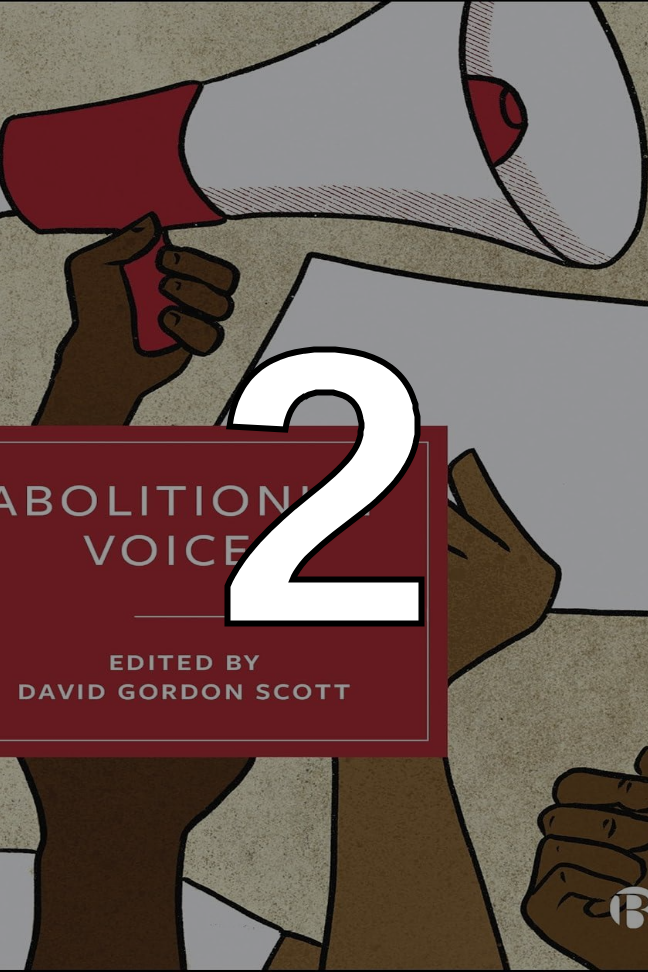
Reading Group 17 – Abolitionist Voices Part Two

For our seventeenth reading group we will finish reading Abolitionist Voices, a compilation edited by David Gordon Scott. From the blurb:

Why have so many radical thinkers advocated for the abolition of prisons and punishment? And why have their ideas been so difficult to popularize or garner the political will for change? This book outlines several different approaches to penal abolitionism and showcases their calls for the ending of legal coercion, domination, and repression.

This exciting and innovative edited collection shows how abolitionist ideas have continued topicality and relevance in the present day and how they can collectively help with devising new ways of thinking about social problems, as well as suggesting alternatives to existing penal policies, practices and institutions.

This month we will be finishing the book, reading Part III onward.

We normally link to a free online version of what we are reading, but this month we could not find one. If you would like to join the reading group but can no afford to buy Abolitionist Voices, please send us an email and we will try and get something sorted for you. Our friends at Freedom Press here kindly offer the space for our use, visit them for radical books, news, and events.

The reading group will be meeting on Tuesday the 27th of January, 19:00, at Freedom Bookshop, 84b Whitechapel High St, London E1 7QX. You are welcome to come and join in the discussion even if you have not finished the reading.

January Drop in Session

Need advice about an issue with your boss or landlord? Want support organising in your workplace or community? Want to talk about anarchism or syndicalism? Want to meet members of the group and find out how SolFed works? Just want to say hi? Then come see us at one of these drop in sessions.

The next session will be on Thursday, January 15th, 19:00 – 20:00, at the London Action Resource Centre (LARC), 62 Fieldgate Street, E1 1ES. We will be in the upstairs rooms. If you can, please bring a donation for the space.